How Far Is 100 Meters? 11 Things That Are 100 Meters Long or Tall
100 meters equals 328.08 feet, 109.36 yards, or 0.1 kilometers. It’s roughly the length of a soccer pitch, twice the length of an Olympic swimming pool, and about the height of Big Ben’s clock tower. Below, we’ll convert 100 meters into every common unit, then walk through 11 real-world things that are about that size, plus how fast the world’s best sprinters cover it.
How Long is 100 Meters in Kilometers?
Since 1,000 meters equal 1 kilometer, converting is a simple division: 100 ÷ 1,000 = 0.1 kilometers. That’s why 100 meters is often used as a “unit” in itself for short distances; sports fields, running-track straights, and city blocks are usually measured in tens or hundreds of meters rather than fractions of a kilometer.
If you want a sense of a smaller slice of this distance, 10 meters, one-tenth of this article’s distance, is a useful reference point on its own.
How Far is 100 Meters in Feet?

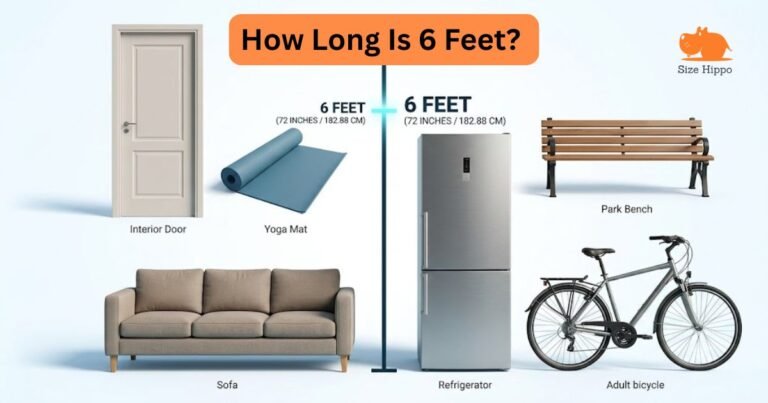
100 meters converts to 328.08 feet (100 × 3.28084). Using an average adult stride of about 2.5 feet (0.75 meters), that works out to roughly 130 steps to cover the distance on foot; figures vary with height, stride length, and pace, so treat this as a ballpark rather than an exact count. For a shorter reference point in the same unit, 300 feet, about 91 meters, is a close neighbor to this distance.
How Far is 100 Meters in Yards?
100 meters converts to approximately 109.36 yards. This conversion matters most when comparing metric sports (soccer and athletics) to yard-based ones like American football, where a full field with end zones runs 120 yards (about 109.7 meters), almost identical to 100 meters, which is why the two are so often used interchangeably as visual shorthand for “about a football field.” For another feet-based comparison nearby in scale, 200 feet is worth a look.
How Long is 100 Meters?
One of the clearest ways to picture 100 meters is on a standard outdoor running track. A regulation 400-meter oval track is built from two straightaways connected by two curved bends, and each straightaway is exactly 100 meters long. That’s also why the 100-meter sprint is run in a straight line rather than around a curve: it’s the length of one full straight on the track.
How Long Does It Take To Run 100 Meters?
Sprint times vary enormously by ability. Casual runners often take 13–15+ seconds to cover 100 meters, while trained sprinters can dip under 11 seconds.
Usain Bolt set the men’s world record of 9.58 seconds at the 2009 World Championships in Berlin, and the women’s world record of 10.49 seconds has stood since Florence Griffith-Joyner ran it in 1988, according to athlete records maintained by World Athletics, the sport’s global governing body.

Things That Are 100 Meters Long/Big
- The Sydney Opera House’s Forecourt Staircase
- Twice the Length of an Olympic Swimming Pool
- Double the Height of the Arc de Triomphe
- Roughly Equal to a Soccer Pitch
- About Half the Height of One Canada Square
- About the Height of Big Ben Tower
- Nearly a Quarter the Height of the Empire State Building
- Three and a Half Basketball Courts
- An American Football Field (With End Zones)
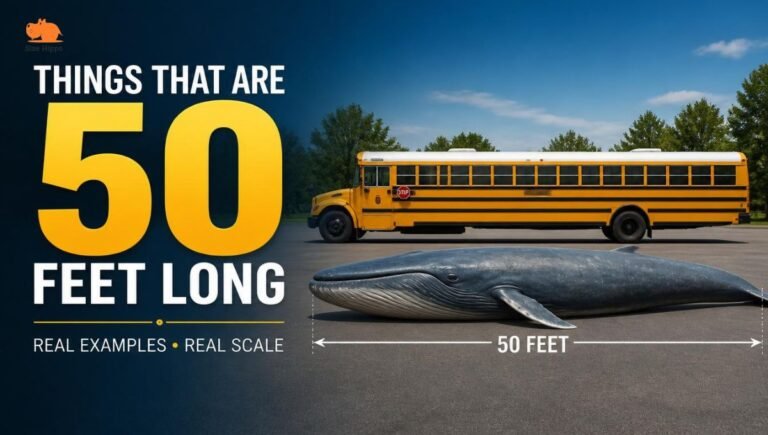
- Roughly Nine School Buses, End to End
- More Than Three Blue Whales, Nose to Tail
The Sydney Opera House’s Forecourt Staircase
The Sydney Opera House itself stretches 183 meters long. Still, one of its most photographed features is closer to our target distance: the grand staircase leading up to the building’s forecourt and podium spans roughly 100 meters wide.

That width is part of why the approach feels so monumental in person; you’re crossing almost the exact distance of a 100-meter dash before you even reach the building’s shells.
It’s Twice the Length of An Olympic Swimming Pool

An Olympic-sized swimming pool is exactly 50 meters long, the long-course standard set by World Aquatics in its official facilities rules for every sanctioned competition. So when you ask, “How far is 100 meters?” one easy answer is it’s simply two lengths of an Olympic pool, the same distance an athlete covers swimming the 100-meter freestyle down and back.
It’s Double the Height of the Arc de Triomphe
The Arc de Triomphe in Paris stands about 50 meters tall, so 100 meters is roughly twice its height. Stacking two of the monuments on top of each other gives a rough sense of just how much vertical distance 100 meters really covers.

It’s Roughly Equal to a Soccer Pitch
A regulation soccer (football) pitch is typically 100 to 110 meters long between goal lines, per IFAB’s Laws of the Game, the body that writes football’s official rules. Sprinting from the goal line to the goal line covers close to 100 meters, which is useful context if you’ve ever wondered how a full-pitch sprint compares to a track sprint. For a related sports-dimension comparison, see how a cricket pitch measures up.

It’s About Half the Height of One Canada Square
One Canada Square, the landmark tower in London’s Canary Wharf, stands 235 meters tall across 50 floors, according to The Skyscraper Center, the official building database maintained by the Council on Tall Buildings and Urban Habitat (CTBUH).
At 100 meters, you’d be a little under halfway up the building, roughly at floor 21 or 22. It’s worth noting this is a different building from the nearby HSBC Tower (8 Canada Square), which is shorter at 200 meters with 45 floors; the two are easy to mix up since both sit in Canary Wharf.

It’s About the Height of Big Ben Tower
Elizabeth Tower, the clock tower widely known as “Big Ben,” reaches 96.3 meters, making it one of the closest real-world matches to a straight 100-meter measurement. Climbing its 334 internal steps gets you almost exactly to the 100-meter mark, with sweeping views of London as the payoff.

It’s Nearly a Quarter the Height of the Empire State Building
The Empire State Building stands 443.2 meters tall, including its antenna, so 100 meters covers a little under a quarter of its full height. That’s still only a fraction of the climb, a reminder of just how much taller the world’s iconic skyscrapers are than a single 100-meter stretch.

Three and a Half Basketball Courts
An NBA basketball court measures 28.65 meters long, so lining up three and a half courts end to end gets you to almost exactly 100 meters. It’s a helpful mental model for basketball fans: next time you’re courtside, picture three and a half of that same court laid end to end to visualize a full 100-meter sprint.

An American Football Field (With End Zones)
An American football field, including both end zones, runs 120 yards, about 109.7 meters. That’s close enough to 100 meters that the two distances are often used as visual stand-ins for each other, even though a football field is technically about 10% longer.

Roughly Nine School Buses, End to End
A standard full-size school bus measures about 35 feet, or 10.7 meters, bumper to bumper. Park about nine of them nose to tail and you’d cover close to 100 meters, a comparison that tends to click quickly for anyone picturing a school pickup line.

More Than Three Blue Whales, Nose to Tail
Blue whales, the largest animals on Earth, can reach up to about 30 meters in length, according to NOAA Fisheries, the U.S. federal agency responsible for marine species science. Line up just over three of them nose to tail, and you’d span roughly 100 meters, one of the more striking ways to visualize the distance without a single man-made structure.

100 Meters Compared: Quick Reference Table

| Reference Point | Actual Size | Relationship to 100 Meters |
|---|---|---|
| Olympic swimming pool | 50 m | 2 lengths = 100 m |
| Arc de Triomphe | ~50 m tall | 2× its height ≈ 100 m |
| Soccer pitch | 100–110 m long | Roughly equal |
| American football field (with end zones) | 109.7 m (120 yd) | Slightly longer than 100 m |
| Big Ben (Elizabeth Tower) | 96.3 m tall | Just under 100 m |
| NBA basketball court | 28.65 m | 3.5 courts ≈ 100 m |
| One Canada Square | 235 m tall | 100 m ≈ under half its height |
| Empire State Building | 443.2 m tall | 100 m ≈ under 1/4 of its height |
| Standard school bus | ~10.7 m | ~9 buses ≈ 100 m |
| Blue whale | Up to ~30 m | ~3.3 whales ≈ 100 m |
Also Read: Badminton Court Dimensions: Full Size Guide — Visual Guide
Conclusion
100 meters is more than just a number on a track; it’s the length of a soccer pitch, roughly the height of Big Ben, and a distance the fastest humans alive can cover in under 10 seconds. Whether you’re picturing it in feet (328.08), yards (109.36), or against a familiar landmark, these real-world comparisons make an abstract measurement easy to visualize and apply, whether you’re planning a run, sizing up a space, or just satisfying your curiosity.
FAQs
How Far is 100 Meters in Feet to Walk?
100 meters converts to about 328.08 feet. Walking that distance typically takes 1 to 2 minutes for most people, depending on pace.
How Much is 100 Meters Visually?
Visually, 100 meters is close to the length of a soccer pitch (100–110 meters) or two full lengths of an Olympic swimming pool, both good mental anchors if you don’t have a tape measure handy.
How Far is 100m in Minutes to Walk?
At a leisurely walking pace of around 4–5 km/h, 100 meters takes roughly 1 to 2 minutes. Terrain and fitness level can shift this slightly, but 2 minutes is a reasonable estimate for most walkers.
Is 100 Meters the Same Length as a Football Field?
Not exactly. A soccer pitch (100–110 meters) is close to 100 meters, but an American football field with end zones measures 120 yards, or about 109.7 meters, roughly 10% longer than 100 meters, even though both are commonly used as quick visual comparisons.
How Many School Buses Equal 100 Meters?
A standard school bus is about 35 feet (10.7 meters) long, so it takes roughly nine school buses parked end to end to span 100 meters.
How Many Miles Is 100 Meters?
100 meters equals approximately 0.0621 miles. Since a mile is much longer, 100 meters is best understood as a short sprint distance rather than a walking or driving one. For a sense of the larger scale, 10 miles shows just how much farther that unit stretches.